This page contains links and archived notes which may be of continuing interest to members of the Astrionomy and Space Group.
Eddie Carpenter
Eddie, a distinguished member of the Group died in 2020. Roger Steer offered the following memory of Eddie.
Eddie was born on 29 November 1941 in Penzance. There was no-one prouder of their Cornish heritage. He was, by trade, a biology teacher, as I was, later in my career. We both trained at Bath College of HE, Newton Park, but missed each other by more than 25 years.
When I re-joined the BAS, in 1996-7. Eddie was well established as Vice-Chairman. He had just taken early retirement. He organised the fortnightly Members’ Evenings.
Eddie has been a good friend ever since we met. We were close (countryside) neighbours (about a mile away). He provided books, that were hard to find. Contacts, that were hard to get. We car-shared to the BAS for most of the time since we met. When I retired, I joined Thornbury U3A and, of course, Eddie was a fixture there too. We didn’t car-share. It was always Eddie who drove, because he always had an overhead projector and a pile of books to bring. He sometimes brought electrical items, of his own making. Having an electronics background, I treated these with some caution!
Everyone knew Eddie. When I spoke to well-known speakers, like Owen Brazell and Lucie Green, they all knew him. Top speakers would arrive and greet him with a ‘Hello Eddie!’ He collected speakers’ autographs. There was no-one he would not approach. He had friends around the world, all connected by the love of astronomy.
He overcame two different cancers, before the third. This was too much even for him.
As well as U3A Astronomy, as I mentioned, he was an active member of the Bristol Astronomical Society, the Society for Popular Astronomy and the Cotswold Astronomical Society.
He had a ‘side-ways’ view of most things and a great insight into the practical side of astronomy – gained over many years.
No one could find a better bargain, nor do a better deal. He was as generous as he was frugal. We will all miss him.
Photograph of Eddie by Steve Wells.

Will Hay
Eddie reported to the group a story about the commedian Will Hay. On August 3rd, 1933, he was returning home late from one of his music hall performances and decided to take a quick peek at the sky through his 6" refractor before turning in. The result was that he was the first person in the world to see a large storm on Saturn.
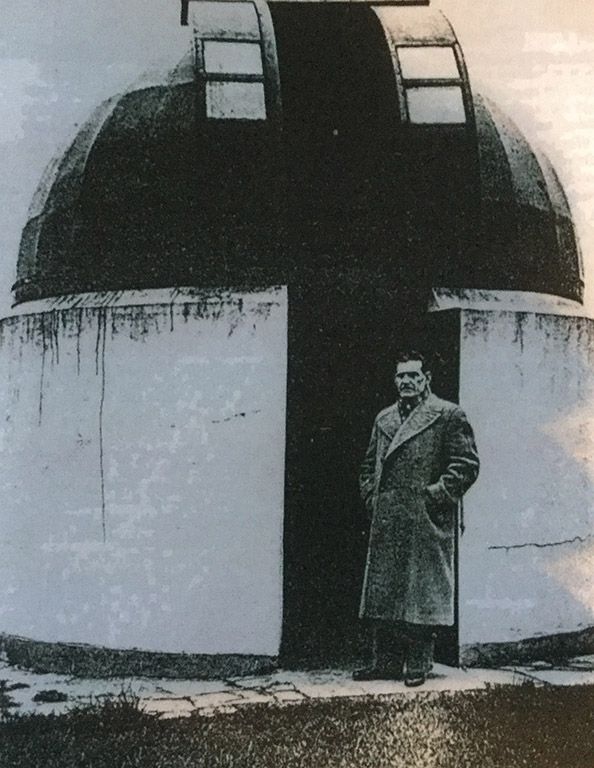
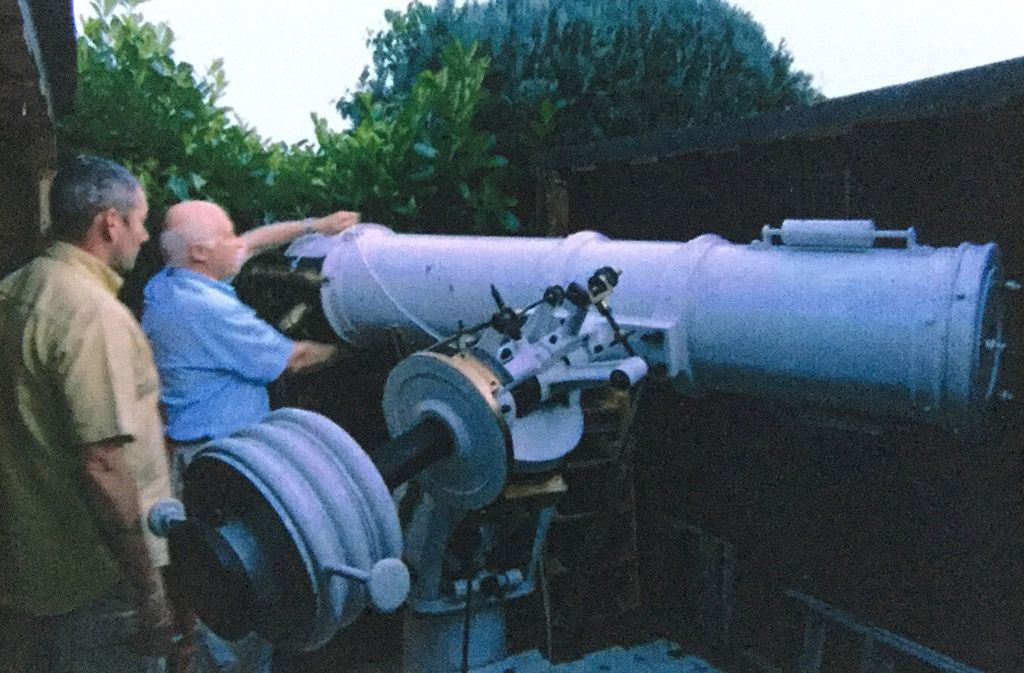
Here are a few photographs of Hay and of his equipment. One shows Hay with the refractor in question, a magnificent piece of kit whose whereabouts today are unknown. Another is of the book he published in 1935 and which contains, among other things, details of his observations that night. A third is of Hay standing outside his observatory and the fourth, the colour photo, is a fairly modern shot of his 12.5" reflector, which is owned by a Hertfordshire amateur astronomer and is in excellent condition and still in regular use. This telescope was constructed in this country in, it is believed, 1905 and reflects the technology of the day. It weighs one and a half tons and is so well blanced that it can be swung around with one hand. You can find videos on You Tube of its owner doing precisely that. Most of you will have seen all this stuff before, but it's worth another look



Heavens Above
The Elon Musk Starlink project is creating problems for observers of the night sky but do provide something else to look for. For details of the dates and times when Starlink satellites may be passing over, see "Heavens Above".
AstroMediaShop
AstroMedia UK is a source for cardboard kits of scientific instruments, models, gadgets, and optical components for experiments, education, and astronomy. For practical experience, talk to Andy Pearson who has been diverting himself by making a cardboard spectroscope. You can get kits from the online shop at AstroMedia.
Moon Rock
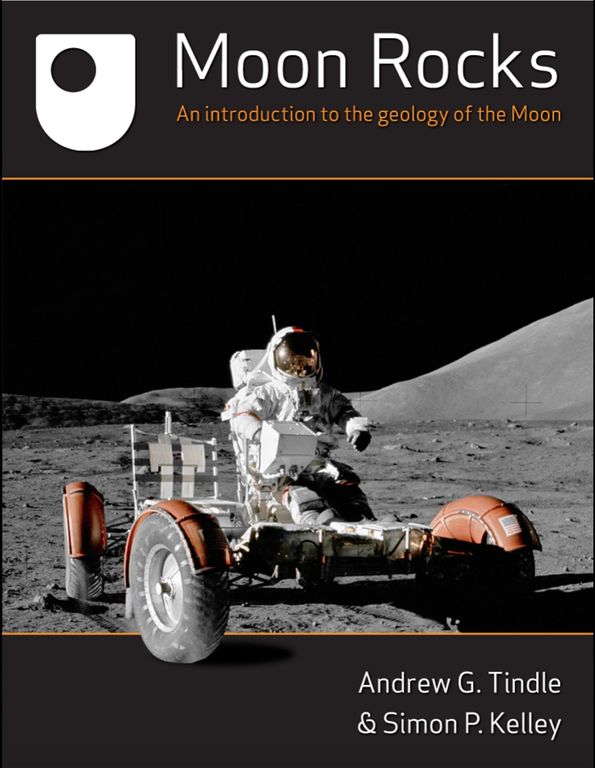
In his talk on December 2nd 2019, Rod Jenkins mentioned an Open University book about Moon Rocks and the geology (it should be selenology, of course) of the Moon. It is little over sixty pages long, richly illustrated and covers a lot of what Rod explained in his talk. It is a free download from Apple iBooks if you happen to have a Mac, an iPad or an iPhone. Unfortunately it is not available in other formats.
Computing Resources
In recent years there have been two talks about Computing Resources. In July 2017 Andy Pearson introduced the smartphone apps which he uses. Then, In January 2019, Andrew McLean gave his view. Together these provide a comprehensive set of resources on which to build a library reflecting your own particular interests. Links are here:
Eddie's Coaster
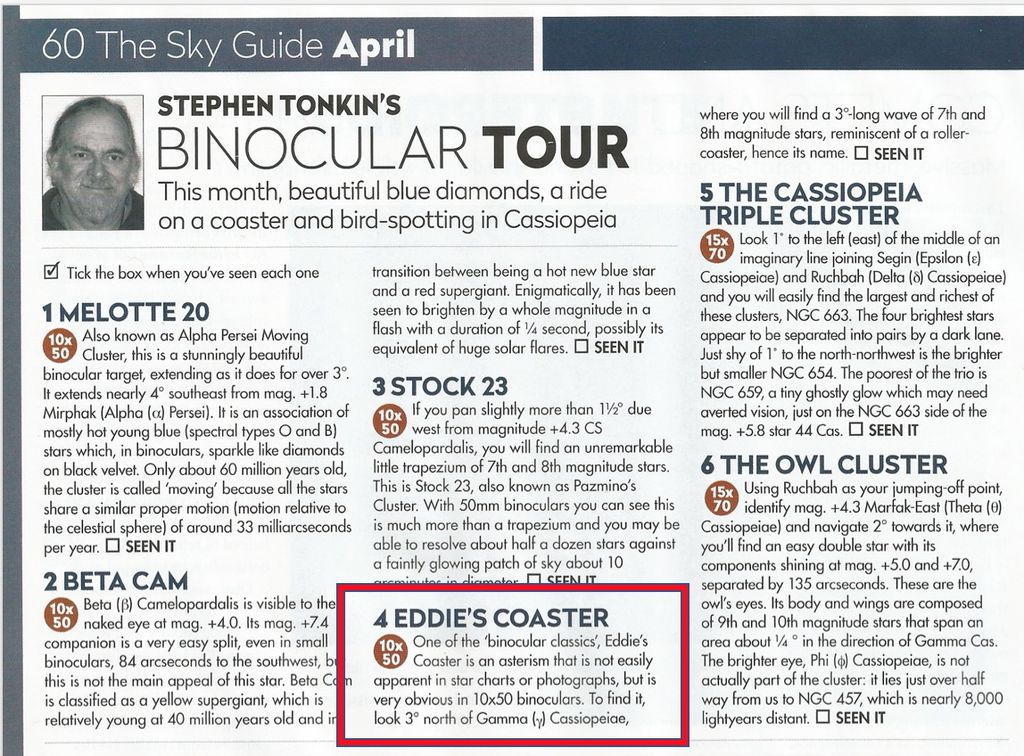
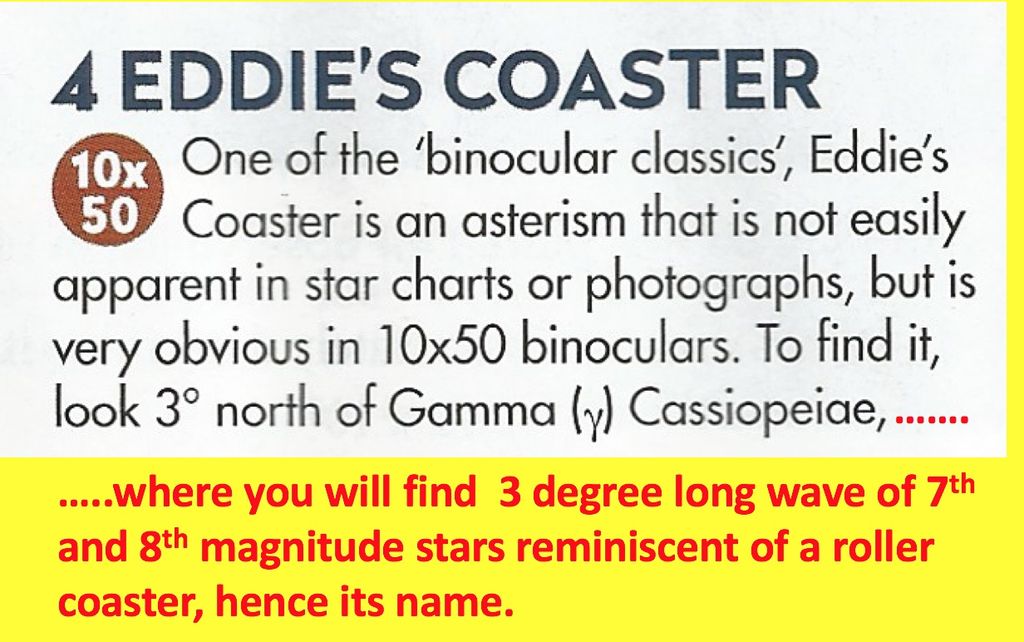
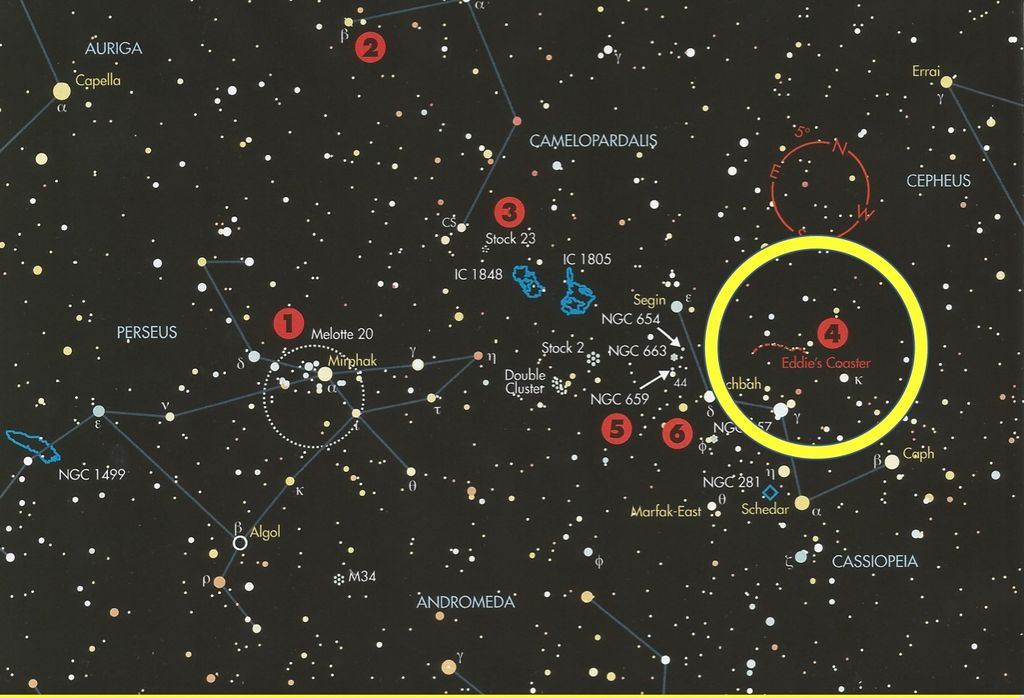
Eddie, who regales us with information on the sights to see in the sky, and events of historical interest, has also become well known for identifying an asterism in the constellation of Cassiopeia. This has become known as Eddie's Coaster for its shape which resembles a roller coaster. It gained some popularity when it was identified in the Astronomy Press.

Links to Sounds and Images
- ESA's top 100 Hubble images
- Images from NASA
- Images of Jupiter from the Juno Mission
- NASA Sound Files
Open University Free Courses
The OU offers several free courses on Astronomy related topics. To see them, follow the link and click on Astronomy.
BBC Radio 4
Th BBC retains some programmes in perpetuity. So, at the time of writing there are 177 editions of "The Life Scientific" online, and over 839 editions of "In Our Time". Get browsing.
The Star of Bethlehem
Rod Jenkins has produced a paper describing possibilities for the Christmas Star. The original paper was published in 2004 and updated in 2019.