Thornbury U3A Birdwatching Group – Visit to Steart Marshes,
Report on outing to Steart Marshes, 10th Nov, 2025
Steart Marshes (https://www.wwt.org.uk/wetland-centres/steart-marshes) is a
fascinating and relatively new wetland nature reserve close to the mouth of the River
Parrett on Bridgwater Bay. Managed now by the Wildfowl and Wetlands Trust (better
known for its Centre at Slimbridge), the largest part of the Marshes was formed by
breaching the old sea wall alongside the river estuary (in 2014), allowing seawater to
flood across what was previously low lying farmland. The effect is to create new areas
of saltmarsh and to mitigate losses of this valuable habitat in the past. Saltmarshes are
a more effective barrier to rising sea levels than artificial structures, are excellent for
sequestering carbon from the atmosphere and particularly in this instance they provide
significantly improved habitat for wildlife.
The visit involved a walk from the car park across to the main hides on the site. Our
route ended next to the river and we retraced our steps calling at a couple more viewing
points on the way back. Our first section was from the car park to the Quantock Hides
which overlook a freshwater part of the reserve with muddy scrapes for wetland birds to
feed. There was plenty of interest as we walked along. A Kestrel was hovering near the
car park and we had several sightings of it from different vantage points. We also saw
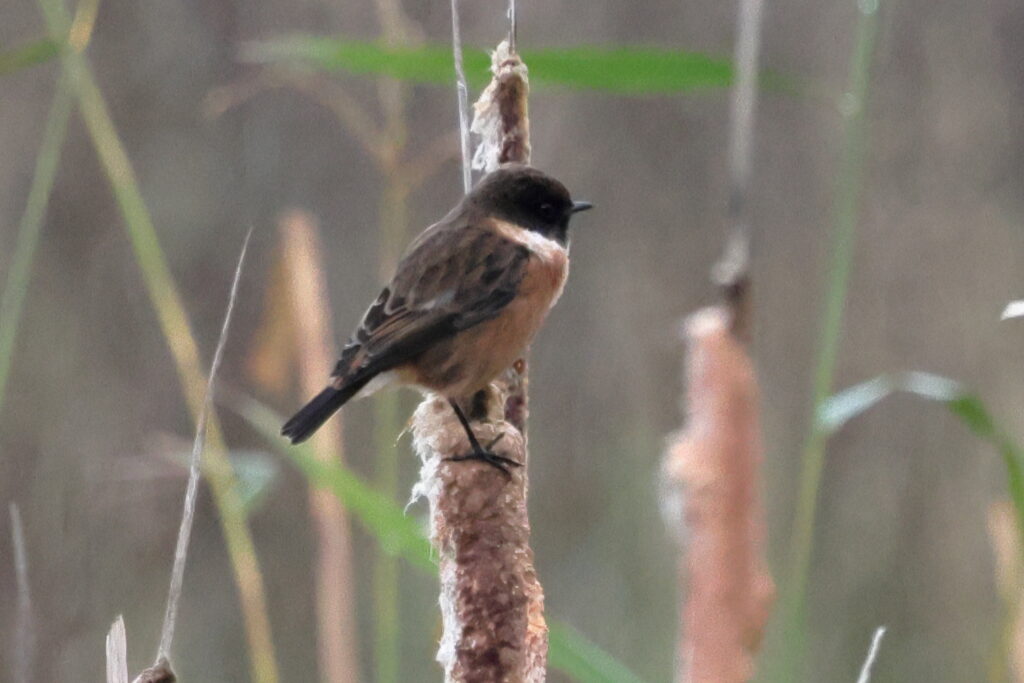
Stonechats as we walked, soon realising that they seemed to be visible everywhere this
time and we probably had more sightings than any of our previous outings to this site.
Many, if not all of them will be overwintering here, although it is likely some might
remain and breed in 2026 We also heard a Water Rail along this section, although
couldn’t see it. Significant numbers of waders took to the air from in front of the hide we
were about to visit and sadly not all of them returned by the time we got there.
Once at the hide we saw good numbers of Golden Plovers and Lapwings, as well as a
Grey Heron, Litle Egret, plenty of Wigeon, Shovelers and Teal, and at least one Grey
Plover. The reserve is well known for overwintering Lapwings and Golden and Grey
Plovers, and their murmurations are a fantastic sight. The sun had come out at about
the time we arrived at this hide, giving us good light with which to see the wildlife.
Unfortunately, we were also looking directly into the sunshine at times here, meaning
the birds were silhouetted and we couldn’t see their colours very well.
So, we moved on to the Mendip hide, and thereafter to the Parrett hide which is close to
the river. Both hides overlook the newly created salt marshes and first impressions are
that it is a grassy expanse of land with little of interest. However, patience was rewarded
in due course. As we set off towards the river there was a Peregrine perched high on an
electricity pylon and it stayed there for a decent length of time giving everyone a good
chance to see it before it flew away. Perhaps it was this bird that spooked the waders
we had seen taking to the air previously?
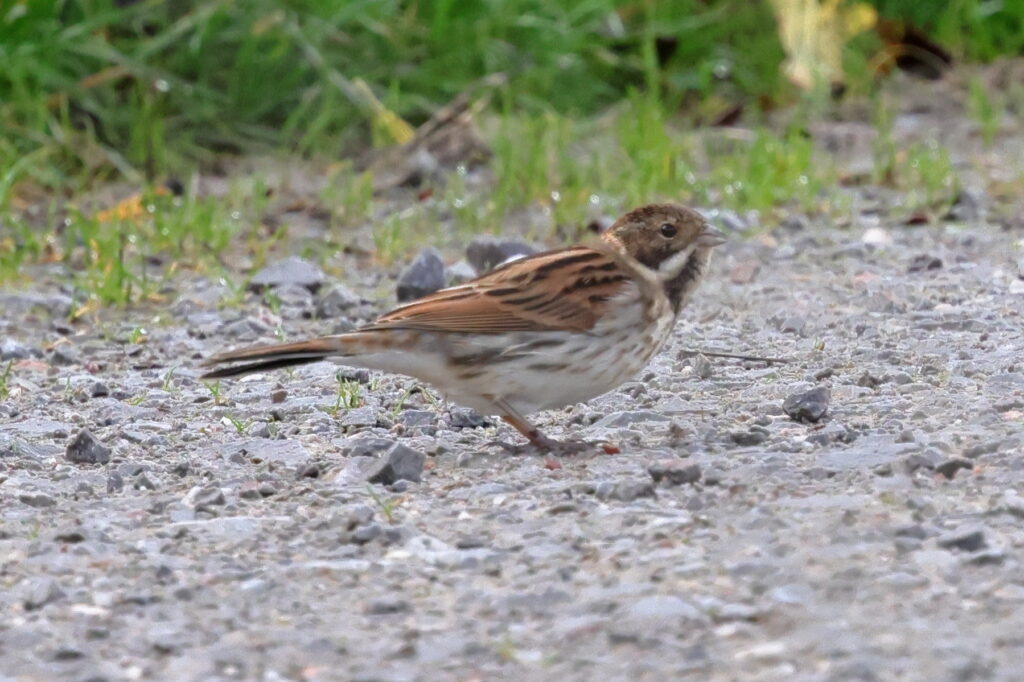
Moving on, we saw Reed Buntings in the reeds and heard several Cetti’s warblers
although they always kept themselves well hidden from view. These were in addition to
more Stonechats and many sightings of Meadow Pipits. Then, from the Parrett hide, we
saw at least two Avocets on the far side of the river, as well as a few Great Black-backed
Gulls and a Grey Heron. One of the Great Black-backed Gulls was very close to the
Heron, which enabled us to see that they were each roughly the same size (the Heron’s
neck being retracted) – thus giving us a good impression of just how large this particular
species of Gull is.
Finally, on the walk back to the car park, we spotted two Marsh Harriers over the salt
marshes (one of which we had seen previously from the Parrett hide. After that, a Merlin
flew past us and landed on a nearby post giving us good views for several minutes.
Overall, this was a successful trip, with a total of 35 species seen.
Mute Swan (Cygnus olor)
Shelduck (Tadorna tadorna)
Shoveler (Spatula clypeata)
Wigeon (Mareca penelope)
Teal (Anas crecca)
Water Rail (Rallus aquaticus)
Moorhen (Gallinula chloropus)
Avocet (Recurvirostra avosetta)
Grey Plover (Pluvialis squatarola)
Golden Plover (Pluvialis apricaria)
Lapwing (Vanellus vanellus)
Curlew (Numenius arquata)
Black-headed Gull (Chroicocephalus ridibundus)
Herring Gull (Larus argentatus)
Great Black-backed Gull (Larus marinus)
Little Egret (Egretta garzetta)
Grey Heron (Ardea cinerea)
Marsh Harrier (Circus aeruginosus)
Kestrel (Falco tinnunculus)
Merlin (Falco columbarius)
Peregrine (Falco peregrinus)
Magpie (Pica pica)
Carrion Crow (Corvus corone)
Cetti's Warbler (Cettia cetti)
Chiffchaff (Phylloscopus collybita)
Wren (Troglodytes troglodytes)
Starling (Sturnus vulgaris)
Blackbird (Turdus merula)
Robin (Erithacus rubecula)
Stonechat (Saxicola rubicola)
Pied Wagtail (yarrellii) (Motacilla alba yarrellii)
Meadow Pipit (Anthus pratensis)
Chaffinch (Fringilla coelebs)
Bullfinch (Pyrrhula pyrrhula)
Reed Bunting (Emberiza schoeniclus)