WWT Slimbridge, 8th December 2025
Leader: Peter Bryant
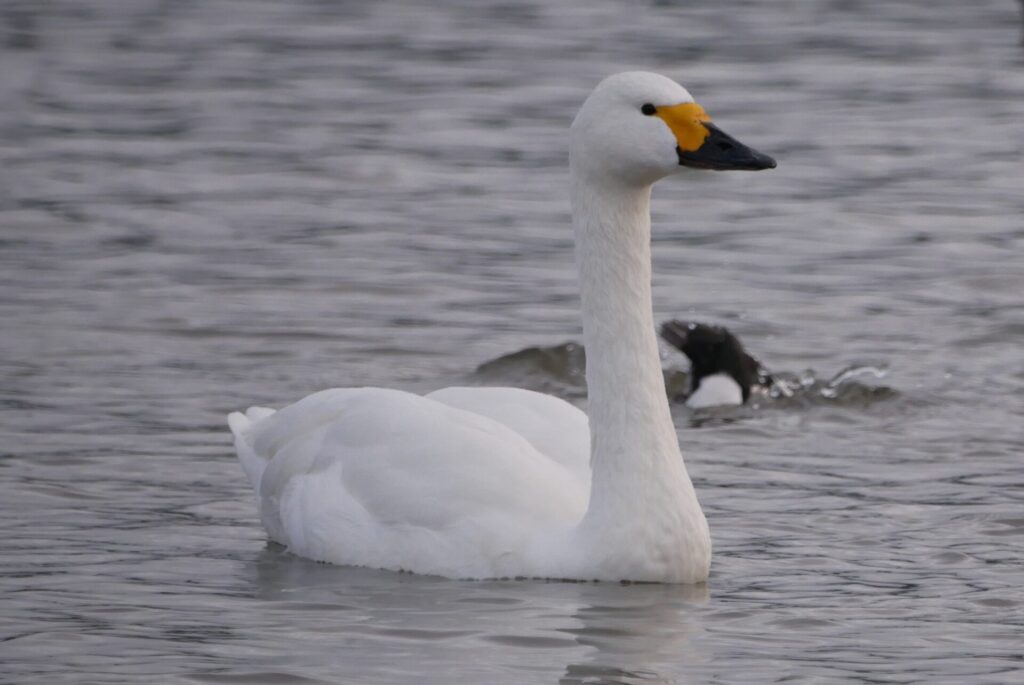
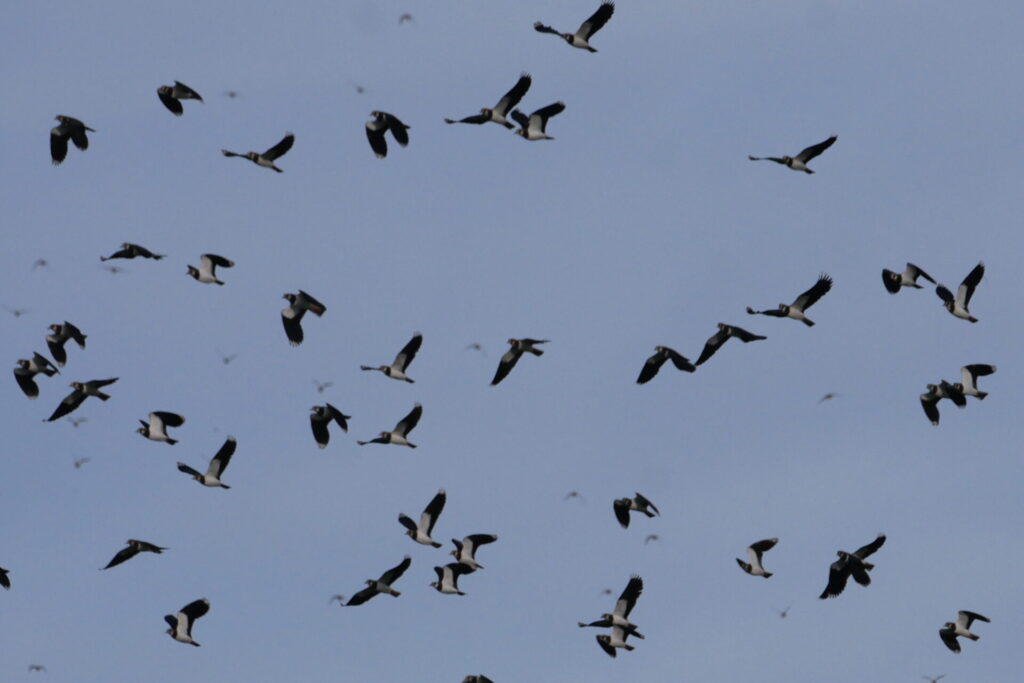
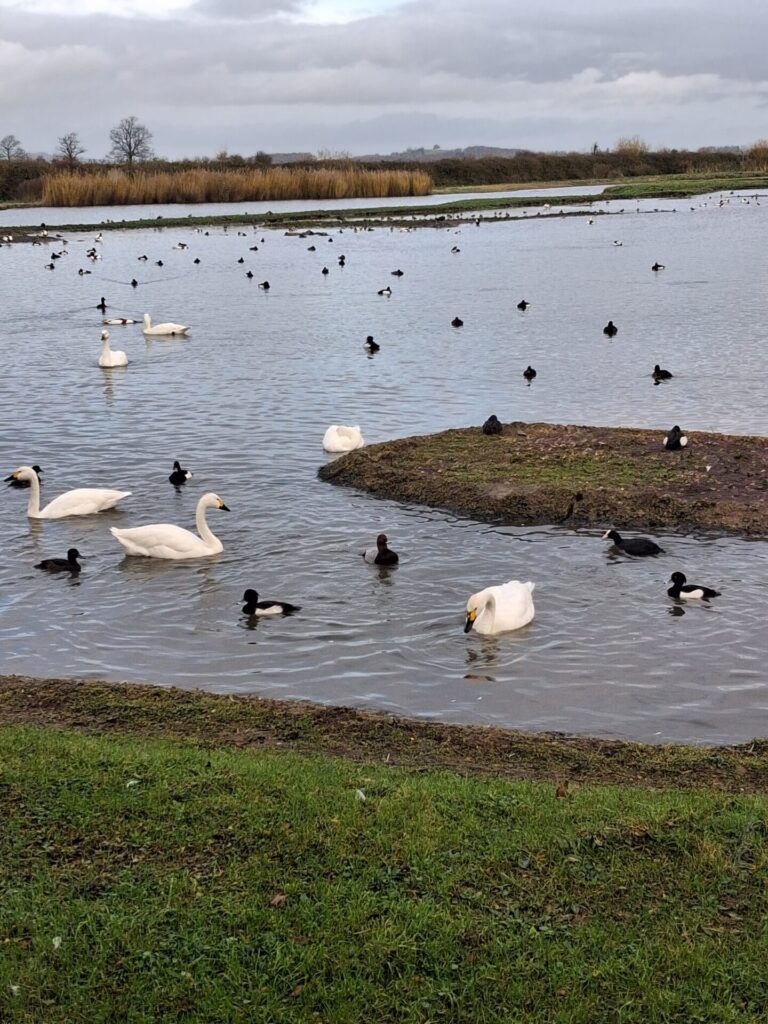
19 members (and one guest) enjoyed the group’s visit to Slimbridge – the weather fortunately brightened over the course of the morning. After hearing a Cetti’s Warbler from the ramp to the entrance hall, our initial stop was the Peng Observatory where our first target species was found. There were around twenty Bewick’s swans (identified by the round shape to the yellow on their bills) seen at close range through the Observatory window. The lagoon yielded a number of species of duck (pochard, tufted, teal, shelduck and pintail) as well as numerous lapwings and our first greylags.
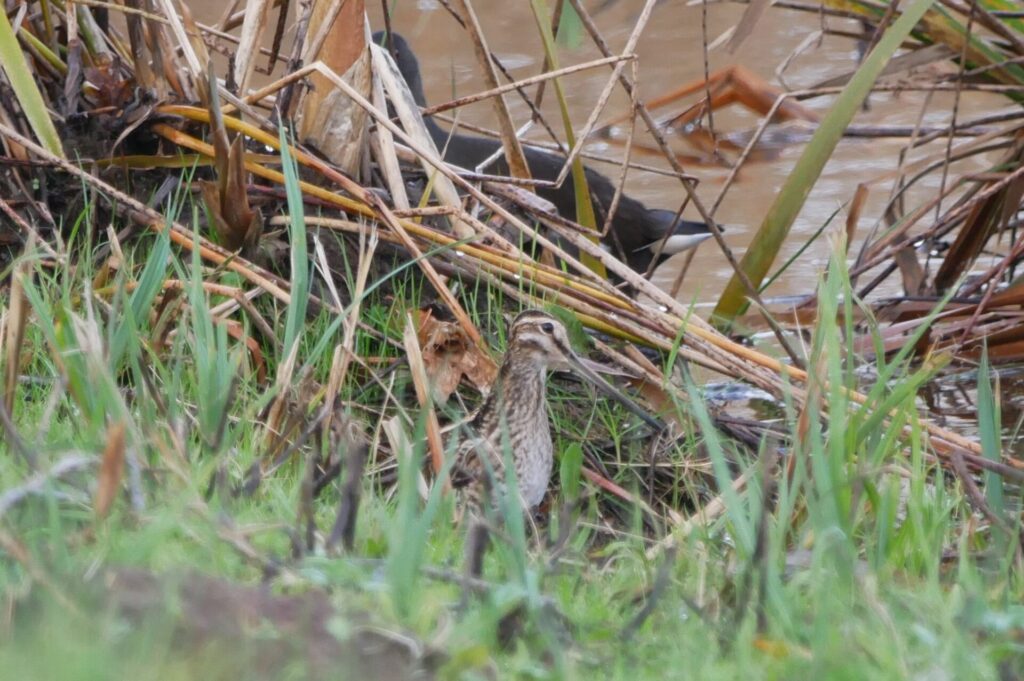
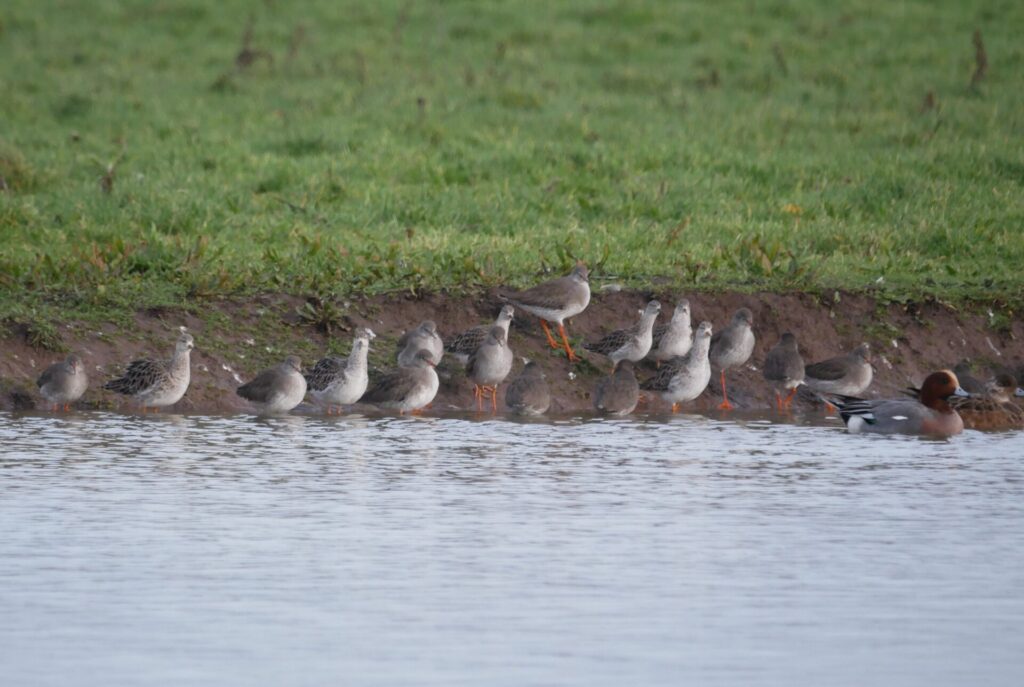
Proceeding up the Estuary walkway, we stopped at the Martin Smith and Robbie Garnett hides. Several varieties of waders were found including snipe, redshank, ruff and a little stint (a rare bird to see in winter). Ducks seen here included large numbers of wigeon and teal. A marsh harrier was hunting over a distant hedgerow.
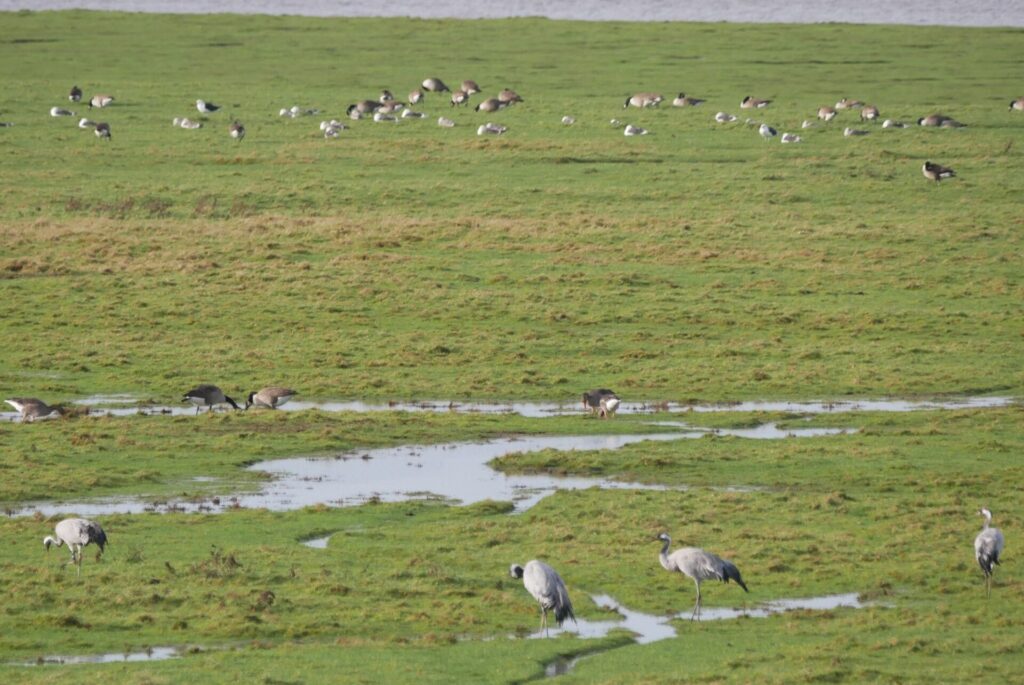
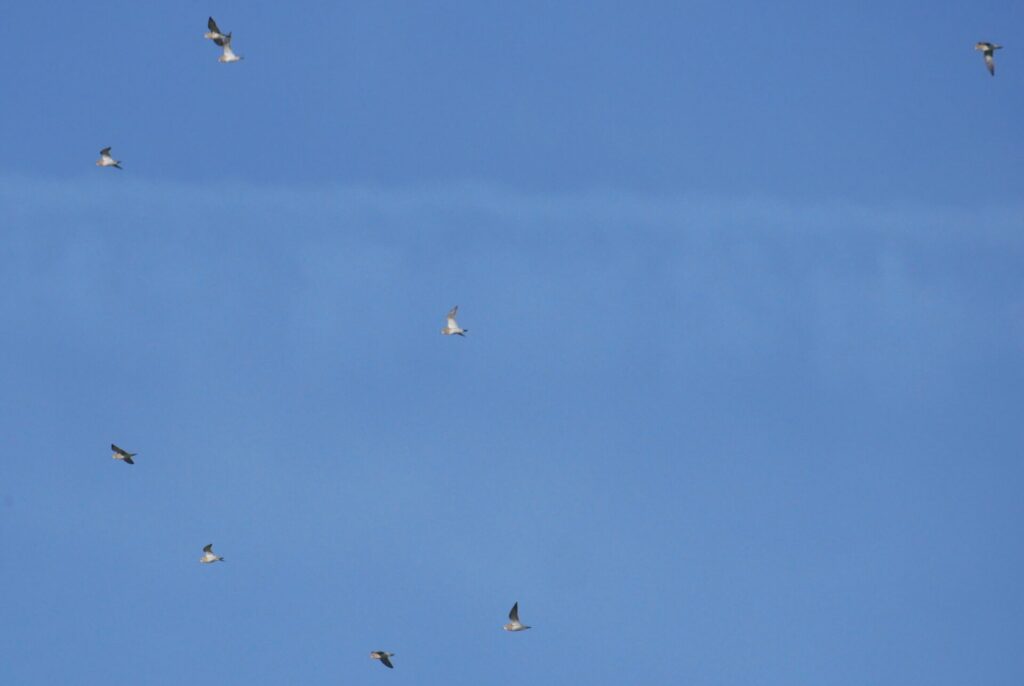
From the Estuary hide, we spotted four cranes as well as several groups of geese (canada, barnacle and greylag but not the expected white-fronted). The estuary shoreline held a dozen or more great black-backed gulls and a similar number of black-tailed godwits. A flock of small waders flying up the estuary were probably dunlin. A stationary peregrine was pointed out to us, each movement of which caused panic amongst the waders on the ground. Swirling flocks of golden plover (together with lapwing) were seen overhead from several points of our walk; estimated at 1000+ plover.
Several of us took a breather at the South Lake Discovery Hide where we learnt that almost all the waders had just been flushed by a peregrine. After about fifteen minutes, the falcon (a female) returned, swooping low over the causeway before heading to a nearby tree, where we were able to ‘scope it. A grey heron and several cormorants were seen on the lake and one common gull was identified amidst the more numerous lesser black-backed, black-headed and herring gulls.
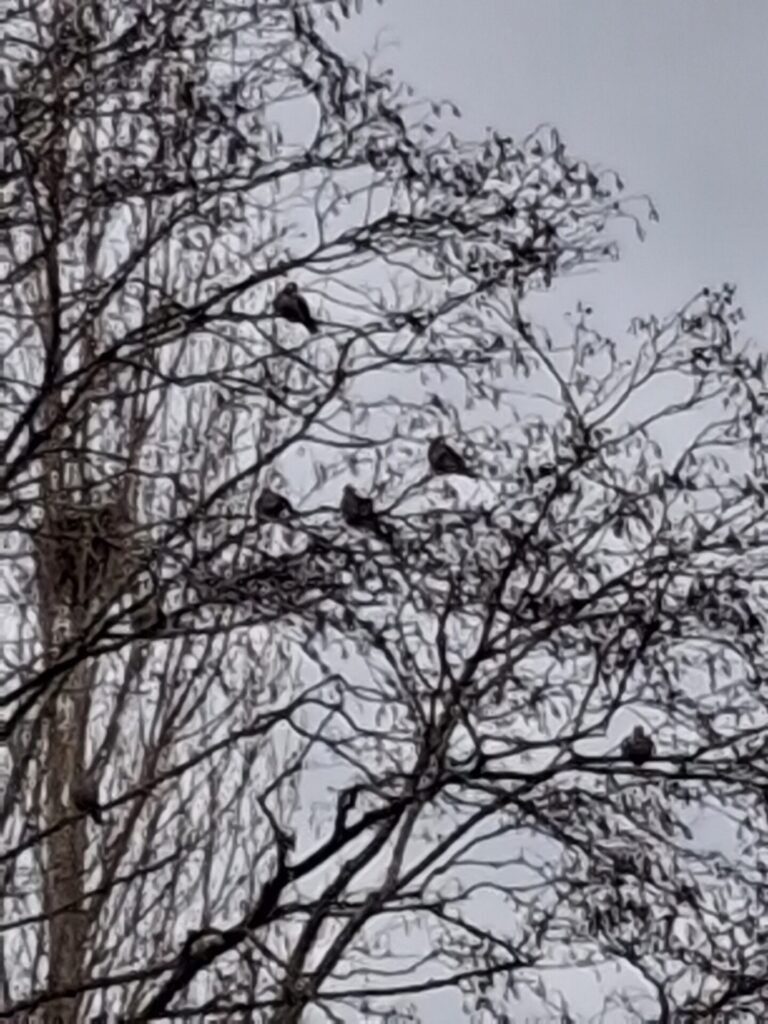
The Zeiss hide yielded few new birds; there was another pair of cranes as well as more barnacle geese, a rook flew past the hide and a pheasant was observed. Some distant thrushes were identified as fieldfares – 30 were later seen in a single tree from the Kingfisher hide. A mistle thrush was also heard (with another reported from the car park before the walk began). The stream in front of the Kingfisher hide held several varieties of duck (including gadwall) and three little grebes. Chaffinches, goldfinches and tits were busy around the feeders and a little egret was seen in flight. A roe deer bounding around a nearby field rounded off an enjoyable trip to this premier WWT site.
Birds seen:
Pheasant Teal Black-tailed Godwit Little Egret
Canada Goose Pochard Ruff Marsh Harrier
Barnacle Goose Tufted Duck Dunlin Peregrine Falcon
Greylag Goose Feral Pigeon Little Stint Magpie
Mute Swan Woodpigeon Common Snipe Jackdaw
Bewick’s Swan Collared Dove Common Redshank Rook
Shelduck Moorhen Black-headed Gull Carrion Crow
Shoveler Coot Common Gull Blue Tit
Gadwall Common Crane Lesser Black-backed Gull Great Tit
Wigeon Little Grebe Greater Black-backed Gull Long-tailed Tit
Mallard Lapwing Cormorant Cetti’s Warbler
Pintail Golden Plover Grey Heron Starling
Blackbird Fieldfare Mistle Thrush Robin
Dunnock Pied Wagtail Chaffinch Goldfinch
56 species
PB
Thanks to Peter and Stuart for the photos