Report of Outing to Aust Wetlands, 12th January, 2026
Report by Dendy
Today’s outing was amazingly well-attended, with 17 members meeting up near the Boar’s Head pub in Aust to take part. As some will recall, Aust Wetlands is a new nature reserve, established recently as part of the Severn estuary flood defence work . It was only handed over by the contractors in about April 2025 and the arrangements for managing it are still very new. The site is former farmland owned by South Gloucestershire Council and reserve management is being taken on under contract by Bristol Zoo. It is also the nearest good sized nature reserve to those of us living in Thornbury and nearby, so an obvious place to maintain our interest in the natural world.
One particularly unusual aspect of reserve management is the planned introduction of a small number of Water Buffalos. The reason for bringing them in is because they are a reasonable alternative to ancient, now extinct, animals that would have contributed to this type of ecosystem thousands of years ago. They have recently been tried out in other uk reserves, with positive results. They are expected to wallow in the wetland areas, keeping watery pools open and preventing reeds and bulrushes from clogging up the wet areas. This should help maintain a wider range of micro-habitats for wildlife, and hopefully a bigger range of bird species for us to enjoy in the future.
Our visit started by walking south from Aust along the track known as either Common Lane or Green Lane depending on who you ask! The hedgerows along this section are good for attracting wintering finches and thrushes, and we were rewarded with sightings of Redwings, a Mistle Thrush, Linnets, Goldfinches and one or two Greenfinches, as well as hearing Green and Great Spotted Woodpeckers and getting excellent views of the local Kestrel.
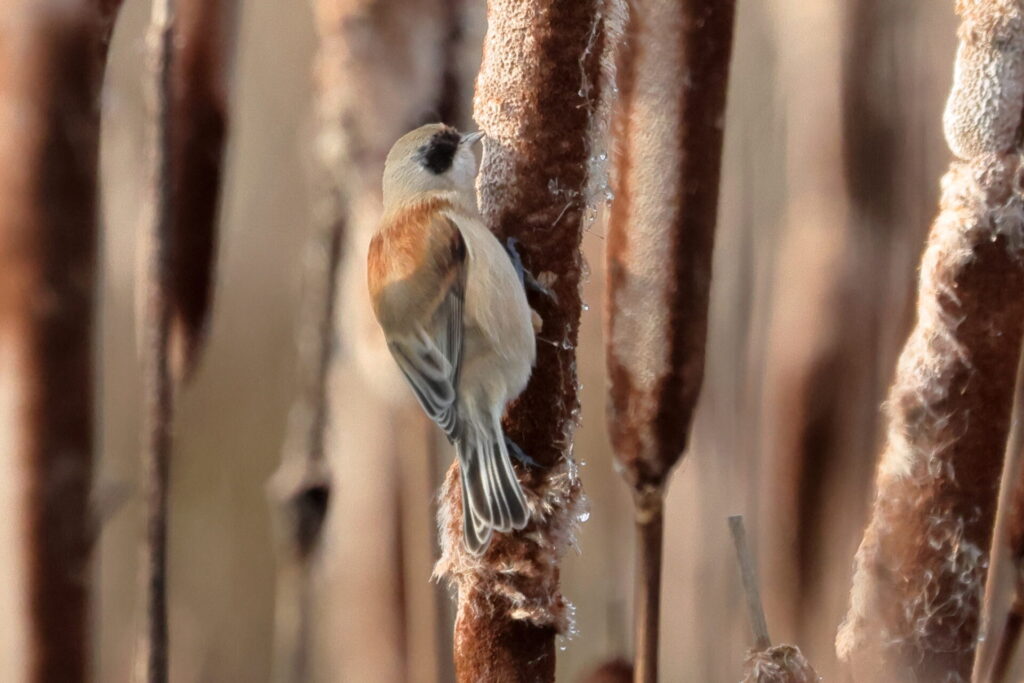
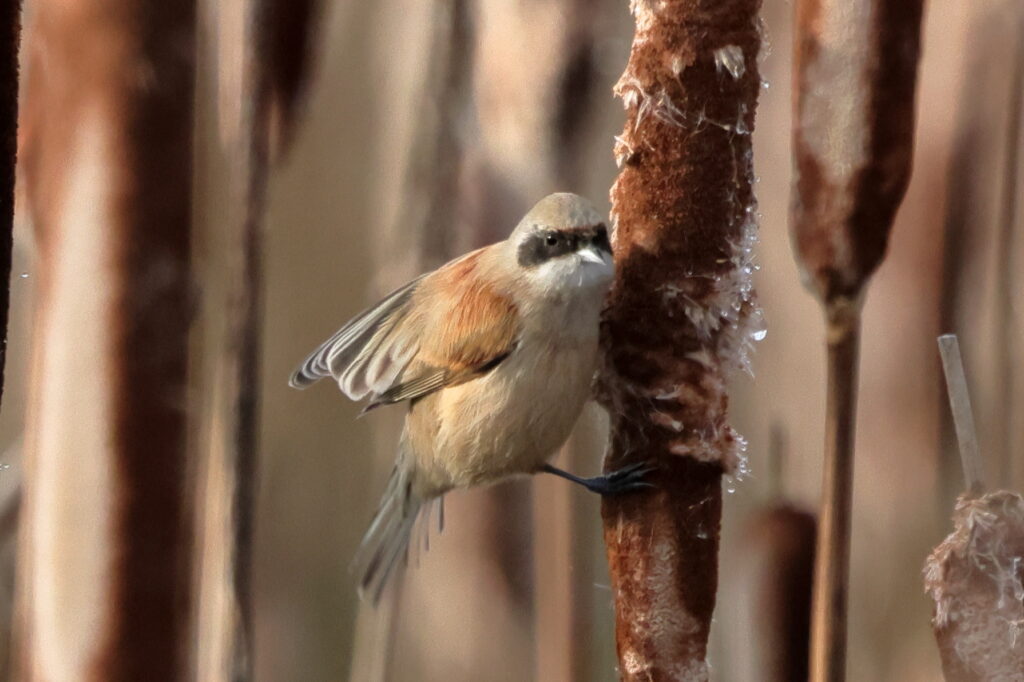
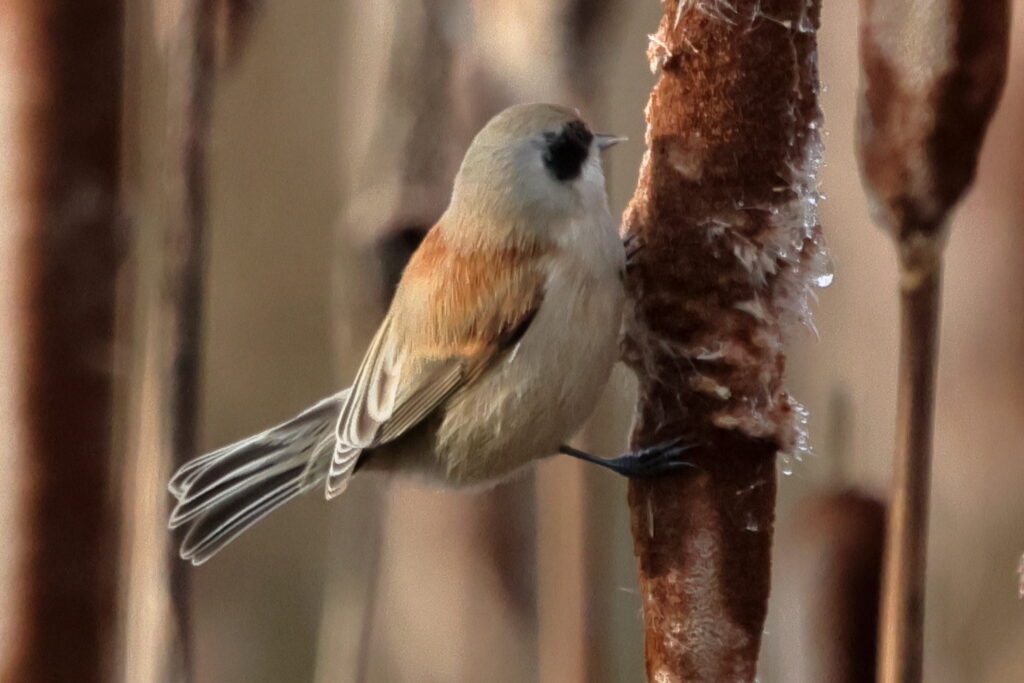
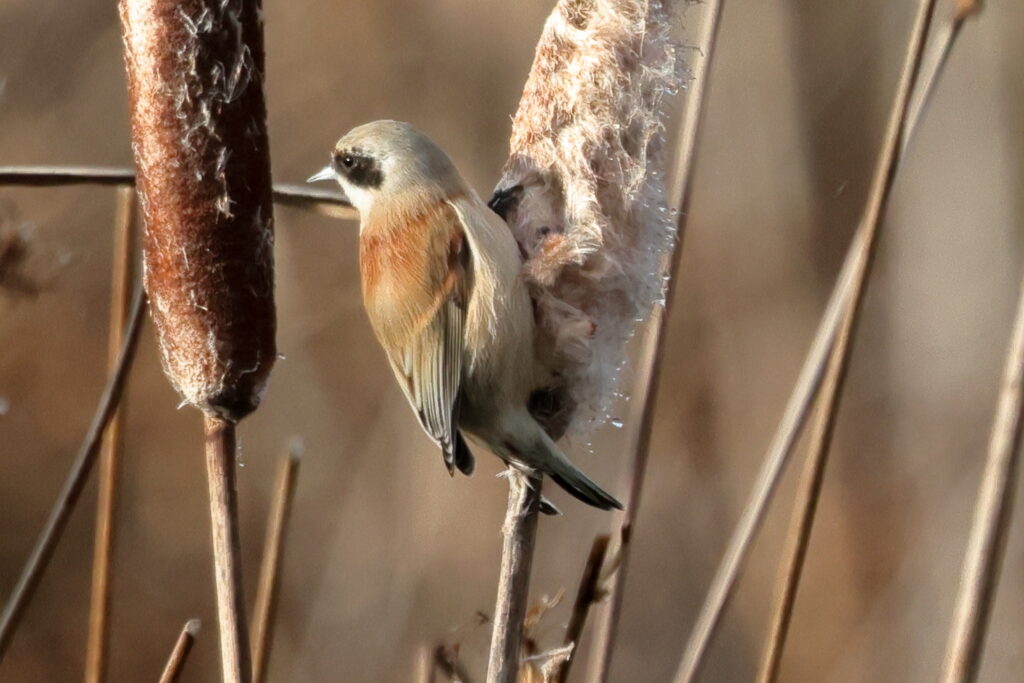
At the southern end of this track, the wetland area opens up and we were able to look across most of the reedbeds. Some members are aware that three of the unusual and very rare Penduline Tit have been recorded here since the week before Christmas and we spent a fair amount of time searching for them. They have been seen regularly since the first sighting in December, feeding on the bulrush heads, but unfortunately we were out of luck on this occasion. They were nevertheless reported by other birders later in the day after we had left and every day since!
We were, however, pleased to be able to find Stonechats, Shovelers, Blue Tits, Long-tailed Tits, a Wren, Skylarks, Meadow Pipits and Reed Buntings across the reedbeds. We also heard a Water Rail and, although we didn’t actually see it, this may well be a first record of this species at this particular site. It seems that the conservation measure may be working in terms of attracting a wider variety of wildlife. Finally, walking further south along the public footpath gave us views of quite good sized flock of Fieldfares. Overall it was a worthwhile visit and we hope the site will continue to be of interest to our group.
30 Species recorded:
Shoveler (Spatula clypeata)
Feral Pigeon (Columba livia f. domestica)
Woodpigeon (Columba palumbus)
Collared Dove (Streptopelia decaocto)
Water Rail (Rallus aquaticus)
Herring Gull (Larus argentatus)
Great Spotted Woodpecker (Dendrocopos major)
Green Woodpecker (Picus viridis)
Kestrel (Falco tinnunculus)
Magpie (Pica pica)
Jackdaw (Coloeus monedula)
Carrion Crow (Corvus corone)
Raven (Corvus corax)
Blue Tit (Cyanistes caeruleus)
Skylark (Alauda arvensis)
Long-tailed Tit (Aegithalos caudatus)
Wren (Troglodytes troglodytes)
Starling (Sturnus vulgaris)
Mistle Thrush (Turdus viscivorus)
Redwing (Turdus iliacus)
Blackbird (Turdus merula)
Fieldfare (Turdus pilaris)
Robin (Erithacus rubecula)
Stonechat (Saxicola rubicola)
Skylark
Pied Wagtail (yarrellii) (Motacilla alba yarrellii)
Meadow Pipit (Anthus pratensis)
Greenfinch (Chloris chloris)
Linnet (Linaria cannabina)
Goldfinch (Carduelis carduelis)
Reed Bunting (Emberiza schoeniclus)
Images by Stuart